


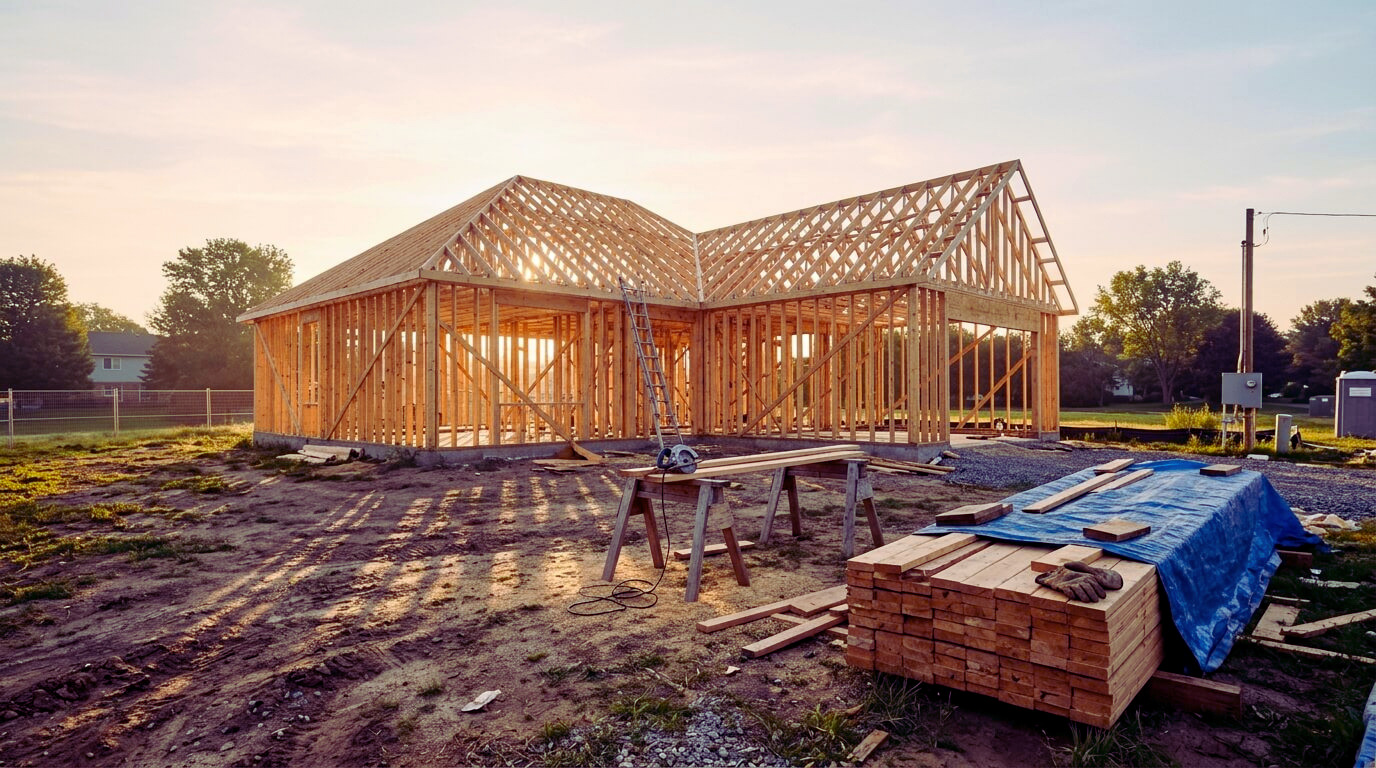
America has roughly 30 million more people than it did in 2010, yet existing-home sales have fallen to levels last seen 16 years ago. And homebuilders are responding by building fewer homes.
According to The Wall Street Journal, new-home starts per community fell 22% from September to October, based on data from John Burns Research and Consulting. Since 2012, the average seasonal decline has been just 3%. This isn’t a routine adjustment. The industry is bracing for another difficult year.
The contradiction is that America’s long-term housing needs haven’t gone anywhere, and the decisions builders make to survive today’s market could shape how quickly the industry can meet those needs tomorrow.
The Economics Discourage Building
Builders haven’t lost the will to build.
Mortgage rates above 7% have pushed buyers to the sidelines, completed unsold new homes per community are running about 50% above normal seasonal levels, and construction financing remains hard to get. According to the National Association of Home Builders, credit conditions for acquisition, development, and construction loans tightened for the 19th consecutive quarter in Q3 2026.
Under those conditions, cutting starts is often sound financial management. Every additional home is another capital commitment, another schedule to manage, and another carrying-cost burden if the buyer doesn’t materialize. For emerging builders with limited capital, getting that decision wrong can be costly, so they’re doing what prudent business owners do: protecting themselves.
What Happens When Everyone Pulls Back
A postponed project doesn’t just delay one home. Subcontractors lose predictable work, suppliers receive fewer orders, land development slows, and capital that might have funded new projects sits idle. Some of those resources may find work elsewhere, as residential construction employment declines while other construction sectors keep competing for workers.
That matters because restarting a housing project isn’t as simple as turning the lights back on. It requires available trades, buildable land, reliable suppliers, sufficient capital, and buyers who can qualify for financing. If any one of those is difficult to secure, the whole project waits.
The Demand Is Postponed, Not Gone
NAR Chief Economist Lawrence Yun recently noted that existing-home sales have returned to 2010 levels despite a much larger population. Population growth and housing demand aren’t interchangeable, but the comparison shows how little turnover is happening relative to the country’s size.

Many households still want to buy, move, downsize, or relocate. Current financial conditions simply won’t let them. When affordability improves, some portion of that postponed demand could return, and the question is whether builders will be positioned to respond.
Prepare Without Overcommitting
None of this argues for building speculative homes regardless of demand. Builders who overextend in anticipation of a recovery may not have the resources to participate when it arrives. But reducing production is different from abandoning preparation.
A builder can preserve relationships with reliable subcontractors as volume declines, evaluate lots without committing to every acquisition, improve estimating and identify products that better match local purchasing power. They can also take a harder look at the business. Which projects consistently produce healthy margins? Where do delays consume working capital? How much additional volume could the business handle without becoming financially vulnerable?
None of those questions require a housing recovery to answer. A difficult market is the best time to answer them.
Readiness Includes Your Capital
Of everything a builder needs to restart, financing is often the slowest piece to put in place. After nearly five years of tightening construction credit, builders who wait until buyers return to find a lender will be starting behind.
Construction lenders look for the same fundamentals in any market: projects that pencil, realistic budgets and schedules, and a track record of managing costs. Builders who use this slowdown to sharpen those fundamentals and build relationships with lenders who understand ground-up construction will be able to move while others are still waiting on approvals.
The Next Advantage May Be Readiness
Nobody knows exactly when housing demand will strengthen. For individual builders, the challenge is the same either way: protect the business you have today without sacrificing the business you want to build tomorrow.
America’s housing needs aren’t going away simply because construction starts are declining. The market may not be rewarding builders for producing more homes right now, but it may eventually reward those who used this period to prepare.
The question isn’t whether you’re building fewer homes today. It’s whether you’ll be ready to build more when the opportunity returns.
Line up your capital before the market turns. Talk to Sound Capital →