


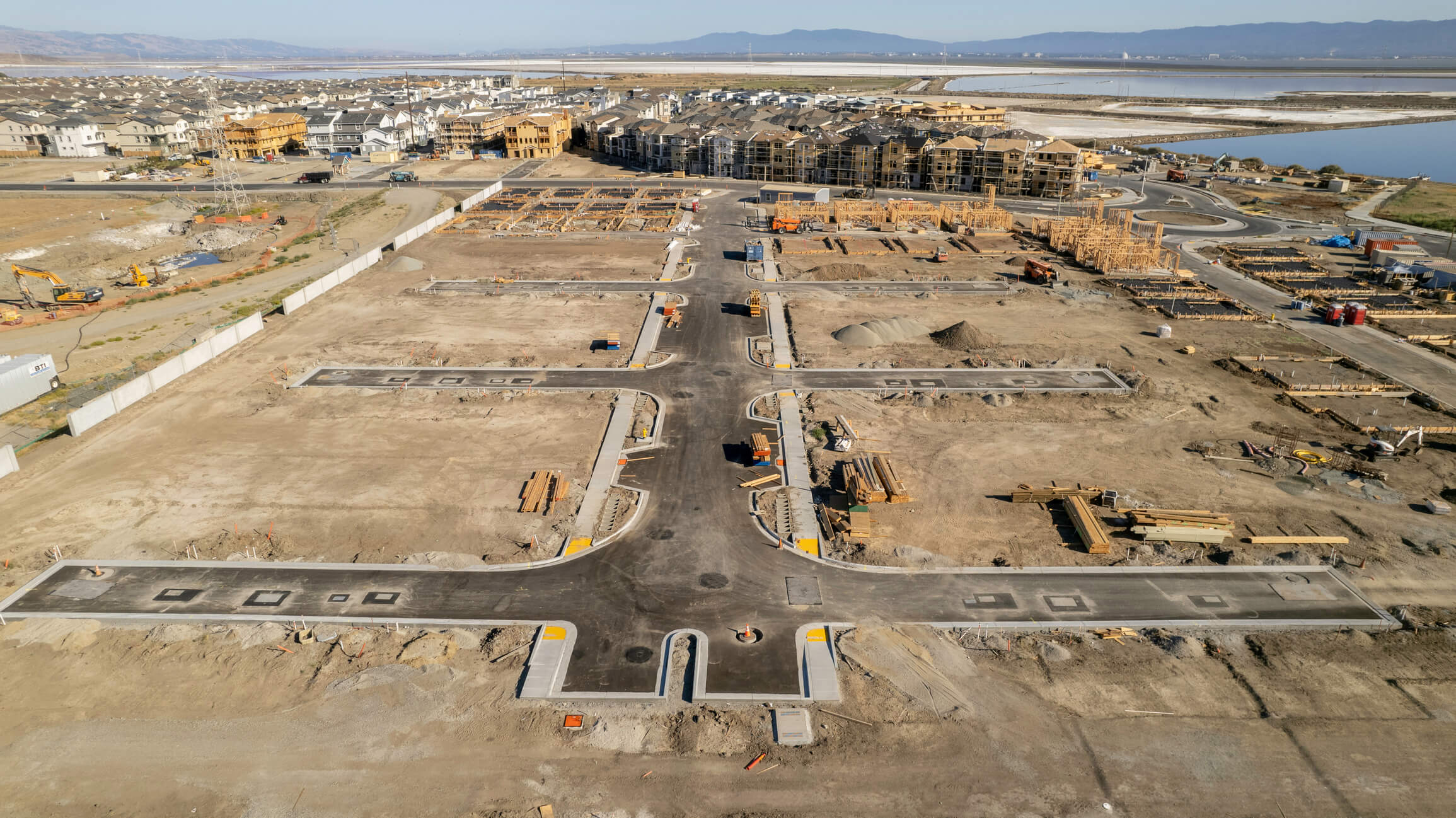
In California, a group of private investors and labor unions just signed the largest construction labor agreement in U.S. history. The goal isn’t incremental. It’s not another subdivision or a handful of units squeezed into an urban core.
They’re planning to build the next greatest American city.
Roughly 100 square miles. Tens of thousands of jobs. Hundreds of thousands of homes. A multi-decade timeline.
On its face, it sounds almost out of place in today’s environment. Too ambitious. Too big. Too optimistic. Which is exactly why it matters, because when you strip away the headlines and look at what’s actually happening, something becomes clear.
- We don’t have a shortage of vision.
- We don’t have a shortage of capital.
- We don’t even have a shortage of labor—at least not in the way it’s often framed.
What we have is a system that makes it incredibly difficult to put those things together and move.
- The land is ready.
- The plans are ready.
- The workers are ready.
And yet, like so many projects across the country, everything still hinges on one thing: Permission.
That’s the uncomfortable truth sitting underneath the entire housing conversation. Not that we can’t build, but that we don’t—at least not at the speed or scale we’re capable of.
For years, the industry has been diagnosing the problem the same way. We need more supply, more labor, more financing. And yes, those constraints exist. Builders feel them every day in rising costs, tighter lending, and longer timelines.
But this project exposes something deeper.
When land, labor, and capital are aligned—at scale—the system doesn’t look broken.
It looks powerful.
It looks like it did in earlier eras, when cities expanded, infrastructure was built, and housing followed demand rather than lagging behind.
The difference now isn’t capability, but coordination and friction.
Talk to any builder who’s trying to grow right now, and you won’t hear a lack of ambition. What you will hear about is delays, approvals that take too long, draws that show up late, or capital that disappears when conditions shift.
Projects that technically work on paper get stuck somewhere between idea and execution. That’s where deals die now.
Which is why this California project is more than just a headline.
It’s a glimpse of what happens when that process is smoothed out—when the usual friction points are addressed upfront instead of one at a time, mid-project, under pressure.
It’s not perfect. It may not even fully materialize the way it’s being described. But that’s not the point. The point is what it reveals.
The ceiling for what can be built in this country is still far higher than what we’re currently producing, and for builders, that should land a certain way because the next phase of growth isn’t going to come from waiting for the market to fix itself.
It’s not going to come from hoping rates drop, or conditions magically improve.
It’s going to come from operating differently within the existing environment.
From reducing friction wherever possible.
From aligning capital, timelines, and execution in a way that keeps projects moving—even when the broader system slows down.
The builders who figure that out won’t just survive this cycle.
They’ll expand in it.
Everyone says housing is broken.
But when you see something like this—a project where the land is assembled, the labor is aligned, and the capital is committed—it raises a harder question.
If we already have what we need to build…
What’s actually stopping us?