
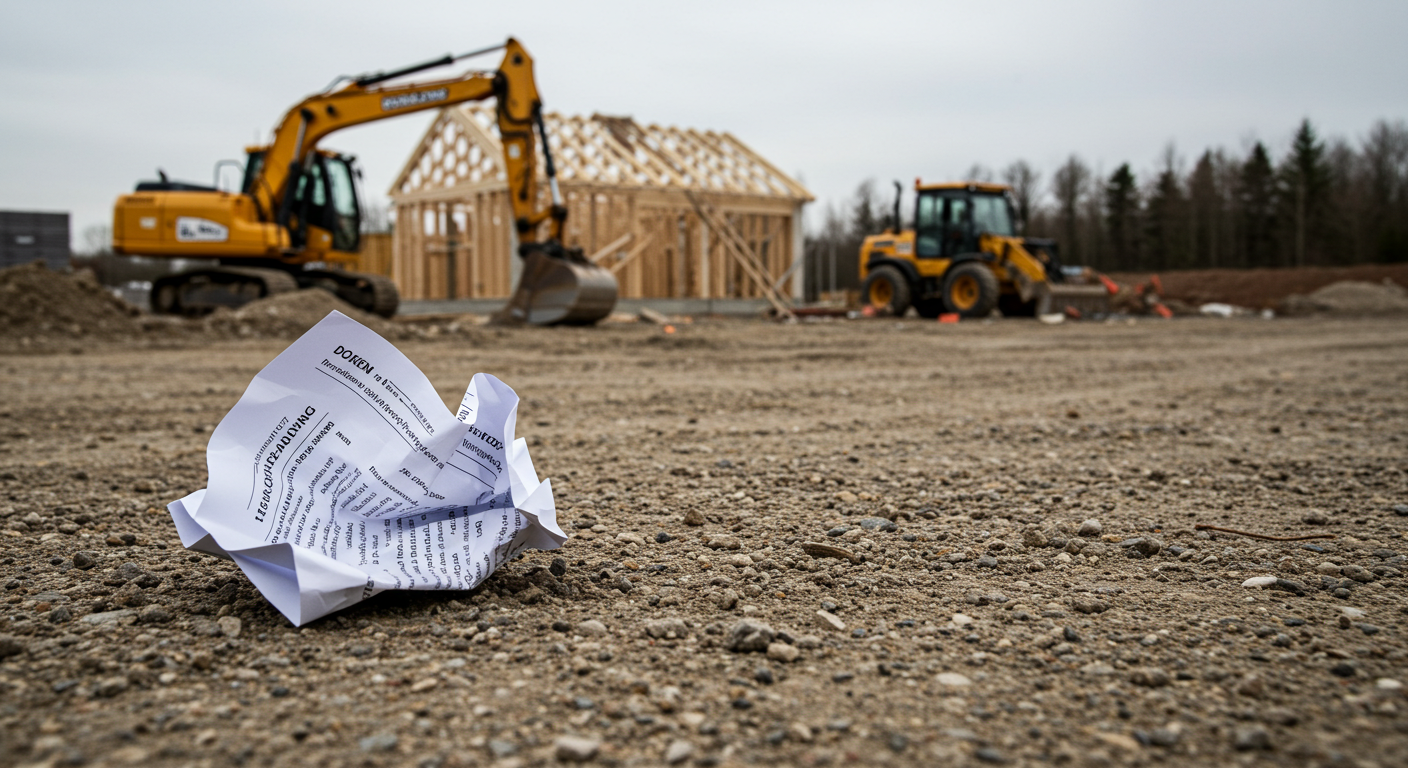
Most builders shop financing the same way they shop trucks: what’s the rate, how fast can I get it?
It’s tempting to stop at surface-level numbers: the interest rate, the timeline, the fees. But as we’ve written about in the hidden costs of bank loans, the cheapest option up front can become the most expensive if it slows your project or puts funding at risk.
Here’s the truth: a cheap loan isn’t worth a dime if your lender runs out of cash mid-project.
We’ve seen it happen.
Delayed draws. Crews walking off the site. Half-built homes sitting idle because a lender relied on borrowed money, and their line got pulled.
Your lender’s financial health matters as much as your own. If they’re shaky, you’re the one left holding the bag.
Here’s how to spot the red flags before you sign.
Why a Lender’s Health Can Make or Break You
Your projects live and die on steady access to capital. If funds don’t flow when you need them, everything stops.
- Delayed draws mean unpaid crews and stalled schedules.
- “Borrow-to-lend” lenders depend on warehouse lines or investors. If that money dries up, so does yours.
- Undercapitalized shops pull back during downturns, leaving builders stranded at the worst possible time.
And this isn’t hypothetical.
According to the NAHB, credit conditions for builders have now tightened for fourteen straight quarters. Lenders are cutting back on how much they’ll fund, demanding personal guarantees, and raising rates.
In other words, it’s getting harder—not easier—for builders to access steady capital.
Key Ratios and Metrics Every Builder Should Know
You don’t need a finance degree—you need to know what to look for.
- Liquidity: Can they meet short-term obligations? Weak liquidity equals risky draws.
- Equity vs. Debt: Do they have real skin in the game, or are they living off borrowed money? Debt-heavy lenders are exposed when rates rise or investors panic.
- Loan-to-Capital Ratio: If they’re stretched thin, there’s no room to cover you when things get tight.
- Defaults + Loss History: A sloppy track record usually means sloppy underwriting—and more risk for you.
Put simply, these numbers tell you if your lender can keep the money flowing—or if they’re one bad quarter away from leaving your project high and dry.
Not all construction loans are created equal, and before you dig into a lender’s balance sheet, it helps to understand the basics. Here’s a clear breakdown of what a construction loan is.
Red Flags to Watch For
Numbers don’t tell the whole story. You can also hear trouble in how a lender talks and acts. Keep an eye out for:
- Vague answers when you ask where the money comes from.
- Constantly shifting terms mid-process.
- Too-good-to-be-true promises.
- A balance sheet that depends on one warehouse line of credit.
- Little or no history in construction lending.
If you spot more than one of these, it’s a good sign you should walk away.
Questions Every Builder Should Ask
Don’t be shy. The right questions save you from the wrong lender.
- Who funds your loans—your balance sheet, or someone else’s?
- How long have you been doing construction lending?
- What’s your average draw turnaround time — and is it guaranteed in writing?
- What’s your loan-to-capital ratio today?
- How did your model perform in the last downturn?
- Can I see sample loan docs before I commit?
- Who makes the final funding call — you, or an outside investor?
Straight answers build trust. Dodges and delays mean trouble.
Once you know the right questions, the next step is positioning yourself to qualify. If you’re wondering what lenders look for, check out our guide on how to get a construction loan.
The Bottom Line
Builders have learned this lesson the hard way. Some left banks for private lenders, only to discover their “fast money partner” was a single warehouse line away from collapse. When that line was pulled, every project came to a standstill.
The strong lenders—the ones who manage their balance sheet—keep funds flowing even in market slowdowns. And for a builder, that kind of stability is worth far more than shaving half a point off the rate.
Smarter Lending = Smarter Growth
Choosing the right lender isn’t just about today’s project. It’s about protecting your crews, your timeline, and your reputation tomorrow.
At Sound Capital, we’re builders at heart. We don’t rely on outside investors to decide if your project gets funded. We keep capital flowing, period.
Before you sign with anyone, make sure they can actually deliver. Or talk with us — we’ll show you how.
Have a project on the table? Request your term sheet today and see how fast we move.
Still planning? Grab the Builder’s Financing Guide and discover why our approach helps builders scale when banks slow them down.
