


We’ve been thinking about this post for quite some time. The end of the year feels like the right time to publish it.
It’s difficult to make clear decisions in uncertain moments—especially when the stakes are real, margins are tight, and the future feels blurry. When conditions are unsettled, the most common response isn’t to charge ahead or retreat.
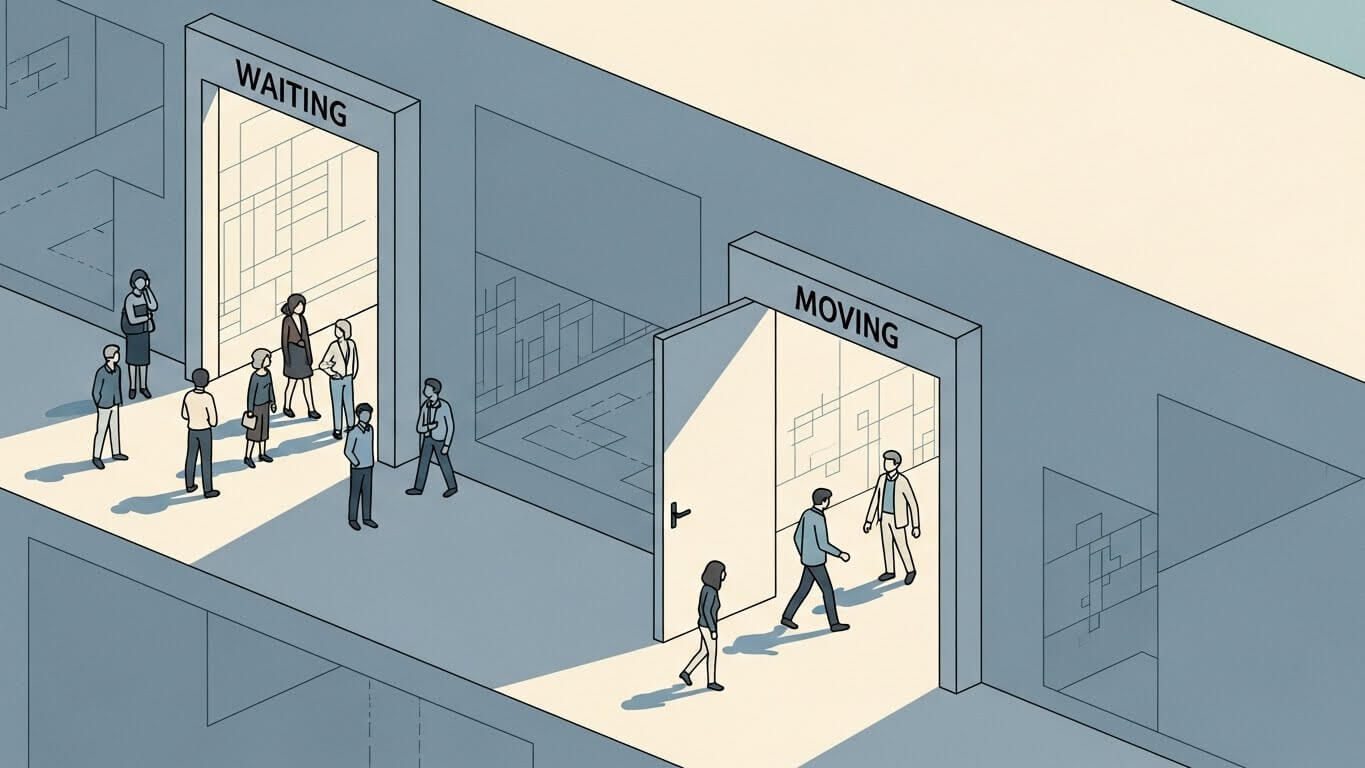
It’s to wait.
Waiting often feels responsible.
Rates might come down. Demand might firm up (the word on the street is that demand is simmering below the surface). One more signal might arrive, making the next move obvious. On the surface, it appears to be caution. But underneath, something else is usually at work.
Decades ago, researchers noticed a strange pattern in how people make decisions. When risks are known—even when the odds aren’t great—people are surprisingly willing to act. But when the odds are unclear, even if the outcome could be better, they tend to freeze.
It turns out we don’t avoid risk nearly as much as we avoid ambiguity. Uncertainty makes inaction feel safer than action.
Builders see this every cycle.
The Jobsite Test
Think about how decisions actually get made on a jobsite. Weather shifts. A delivery is late. A crew doesn’t show.
Rarely do you get perfect information—but waiting for it isn’t an option.
You still decide whether to pour, re-sequence work, or adjust the schedule. Not because the outcome is guaranteed, but because standing still creates its own set of problems.
The same logic applies in markets like this one.
Waiting for absolute clarity on rates, buyer behavior, or policy feels cautious—but it’s no different than leaving a crew idle because the forecast might improve tomorrow. You haven’t eliminated risk. You’ve just traded visible risk for hidden cost.
Time keeps moving. Carry costs accrue. Momentum slows. Optionality shrinks.
In construction, experienced builders don’t confuse uncertainty with paralysis. They plan for what they can’t control and still make deliberate moves. The question isn’t whether conditions are perfect. It’s whether you’re positioned to keep moving when they aren’t.
We’re Already Seeing This in the Wild
This isn’t theoretical. We’re seeing builders act this way right now.
Across the country, many builders are still moving product despite mixed signals. They’re adjusting how they sell—accelerating move-in-ready inventory, tightening cycle times, and using targeted incentives—rather than pausing and waiting for a “cleaner” environment.
These moves aren’t about chasing gimmicks or masking fundamentals. They’re about maintaining momentum in a market where clarity is incomplete.
Mortgage buydowns, for example, aren’t always in the buyer’s long-term favor. Builders know that. But the broader point isn’t the tactic—it’s the mindset.
Builders who continue operating are making a conscious trade: acting with imperfect information instead of waiting for certainty that may never arrive.
That’s not recklessness. It’s realism.
The Cost of Waiting Is Easy to Miss
What makes waiting so seductive is that nothing visibly breaks today. No concrete is poured. No capital is committed. No headline risk appears on the balance sheet.
But the costs compound quietly.
Pipelines thin. Crews drift. Land opportunities pass. Competitors who stayed active gain share.
Standing still feels safe because it’s quiet. But in construction, time is never neutral.
A Necessary Counterpoint
To be clear, waiting isn’t always wrong.
There are moments when preserving liquidity, pausing expansion, or tightening focus is the disciplined move—especially when a balance sheet is stretched, a market is clearly oversupplied, or operational fundamentals need repair.
Prudence matters.
The mistake isn’t waiting itself; it’s waiting by default.
When waiting becomes a substitute for strategy—driven by discomfort with uncertainty rather than a deliberate assessment of trade-offs—it quietly turns into drift.
Strategic waiting has a plan and a trigger to re-engage. Passive waiting just hopes that conditions improve.
This Is Where Financing Gets Misunderstood
This is also where many builders misread the role of financing.
In uncertain environments, financing is often treated as a variable to wait out—something to revisit once rates, spreads, or sentiment improve. But the builders who navigate these cycles best don’t see capital as a line item to minimize. They see financing as a tool to preserve motion.
Certainty matters more than precision.
Knowing you can fund the next project, carry inventory, or move when an opportunity appears often outweighs shaving a few basis points off a rate. Momentum—not timing perfection—is what keeps operations healthy through ambiguity.
The Real Choice on the Table
This cycle isn’t asking builders to predict the future. It’s asking them to decide how they respond to incomplete information. Do you wait for clarity—or do you design for uncertainty?
The builders who pull ahead rarely do so because they guessed right. They do so because they kept moving while others waited for permission.
Uncertainty doesn’t stop decisions. It just changes which ones feel comfortable.
And in construction, comfort has never been synonymous with progress.