



Construction happens step by step—and so should your financing. From the first dig to the final beam, each milestone needs funding. A draw schedule releases cash as work is completed, keeping subs moving and materials stocked.
But even the right financing can’t save a project if draws aren’t timed correctly. Off-schedule payments stall crews, tie up supplies, and push timelines—turning a smooth build into a stalled one.
The difference between finishing on time or falling behind? How well you manage your draws.
What Is a Draw Schedule?
A draw schedule is your payment roadmap for a construction loan. Instead of getting a lump sum upfront, you pull funds in increments as the work gets done. No more, no less.
Each draw is tied to a milestone you hit on the job site: site prep, foundation, framing, mechanicals, or finishes.
You complete the step, the lender verifies it, and the next round of funds gets released. Miss a stage or fall out of scope, and the funding stops until you’re back on track.
Why Lenders Use Draw Schedules

Why are construction loans riskier than regular loans? It’s simple: the property isn’t finished, and nothing’s guaranteed.
Draw schedules help lenders manage that risk. By deploying cash in stages, lenders keep a close eye on where the money is going and if the project is actually moving.
If something slows down or goes sideways, they can pump the brakes on disbursements until things get sorted out.
For spec builders, this also works in your favor—staying within scope and on schedule keeps your finances steady, so your project never has to wait for money.
Understanding and Managing Draw Schedules
While every project is unique, most follow a similar draw structure tied to key milestones.
Understanding the process—and planning strategically—keeps your project on track and your money ready when you need it.
Typical Stages in a Draw Schedule
Construction draw schedules can vary depending on the size and complexity of a project—larger projects can have more stages, while smaller projects may consolidate steps.
Lenders may also withhold a portion of payment (retainage) until the project is fully completed.
To give you a clear idea of a schedule, here’s a typical breakdown of construction stages and the approximate percentage of funds released at each step.
|
Construction Stage |
Possible Draw Percentage |
| Site Preparation & Permitting | 10% |
| Foundation & Footings | 15% |
| Framing & Structural Work | 20% |
| Mechanical Systems | 20% |
| Interior Finishes | 25% |
| Final Completion & Inspections | 10% |
Requesting Draws
Payments are released only after work is verified. Typical requirements include:
- Inspections confirming completed work
- Lien waivers from subcontractors
- Invoices and receipts
- Progress photos
Be sure to stay organized—missing or incomplete documentation is the fastest way to delay a draw.
Tracking Funds and Avoiding Delays
Draws can take a week or more, even on smooth projects. Weather, paperwork, inspections, and change orders can cause delays, so build a buffer into your schedule and budget.
You can stay funded between draws by:
- Maintaining operating reserves
- Timing subcontractor payments to match draw schedules
- Monitoring your budget closely
- Understanding your lender’s rules for approvals, retainage, and documentation
The period between draws is often when projects hit trouble. Proactive planning turns this window into a manageable step instead of a cash-flow crisis.
Common Mistakes to Avoid
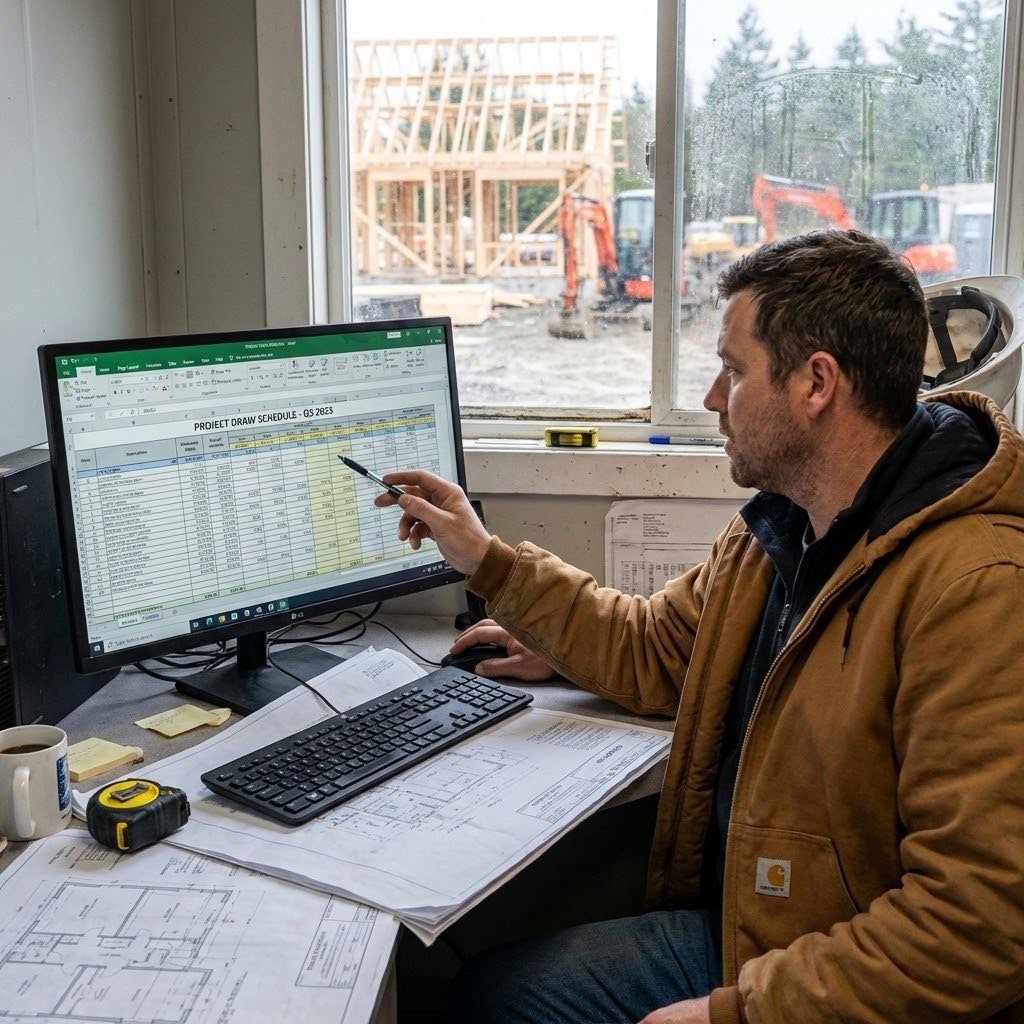
Even seasoned builders can stumble on draw schedules. Here’s what to watch out for:
Jumping the Gun on Inspections
Requesting a draw before inspections are complete almost guarantees rejection and delays.
Finish the milestone, schedule the inspection immediately, and don’t request money until it’s signed off on.
Ignoring Your Lender’s Terms
Draw schedules can include specific conditions, such as retainage requirements or documentation standards.
For example, some specialized lenders like Sound Capital require a vertical building permit to be fully issued before they will release the first draw or allow you to utilize interest reserves.
Read your terms, understand the triggers, and ask follow-up questions if you need clarification. Don’t get caught off guard mid-project because you glossed over the fine print.
Misaligning Your Budget With Your Draws
Fall out of step between your construction budget and draw milestones, and you’ll face idle job sites, delayed deliveries, and a project that drags to a crawl.
Map every draw against your budget before you break ground to keep the build moving.
Picking the Wrong Loan
The wrong loan can create funding gaps and slow your project. Traditional bank-backed loans often have slow approvals or unpredictable draws, leaving you waiting for money.
For spec builders, an experienced alternative lender can deliver loans tailored to your workflow—with quick approvals and reliable draws to keep subs paid and projects rolling.
Get Smarter Funding With Sound Capital
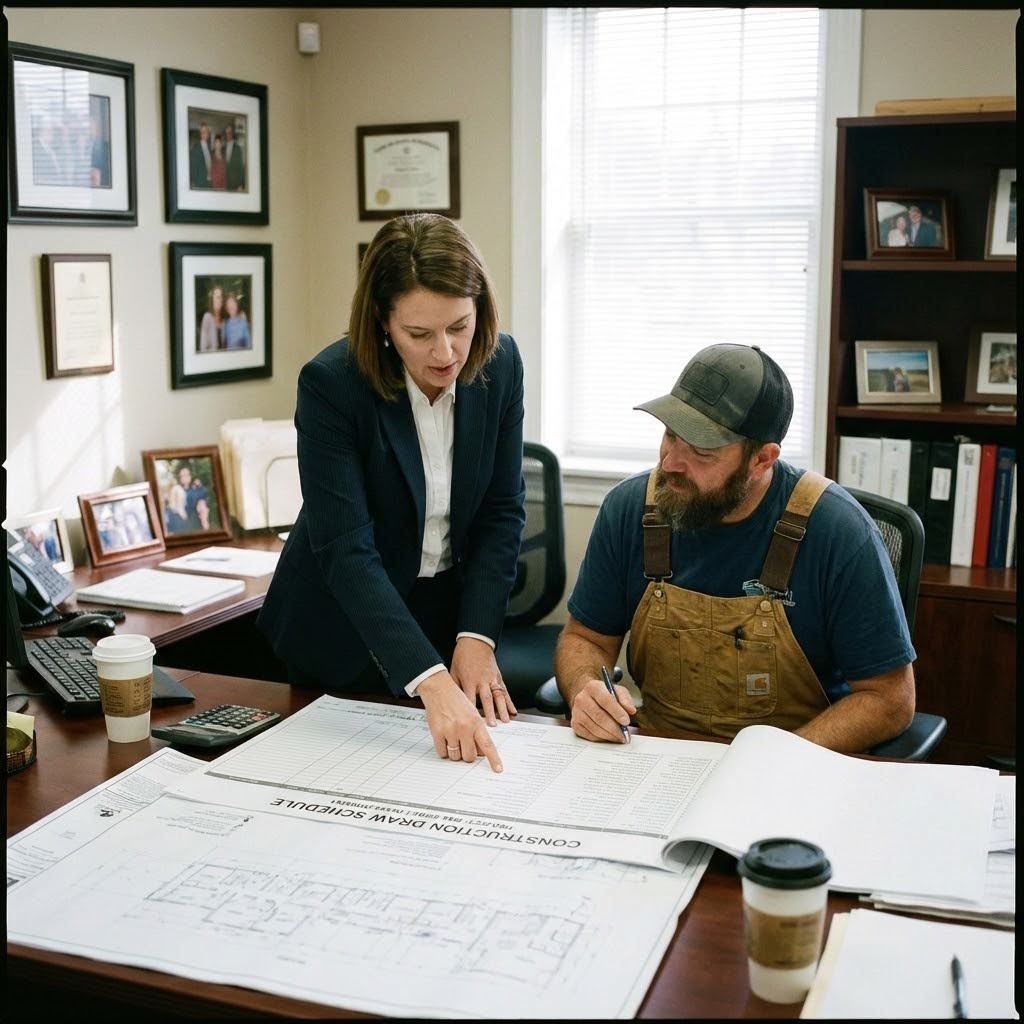
From groundbreaking to final walkthrough, draw schedules aren’t paperwork—they’re the pulse of your project and your business
Builders who understand the process use it to their advantage. Know your milestones, own your documentation, plan your budget, and make sure you’re working with a lender who moves as fast as you do.
At Sound Capital, we work with builders who are serious about scaling. Our loans operate as a construction reimbursement process rather than a line of credit, and we’ve optimized every step for speed.
With quick approvals, high-leverage options, and draws that sync with your milestones, we ensure your cash flow stays predictable from start to finish.
The Sound Capital Draw Process
Every builder manages capital differently. We offer two draw process options—standard and auto—so you can pick the one that fits your operation best. Here’s what sets them apart.
| Standard | Auto | |
| What is it? | The borrower submits a draw request, and Sound Capital orders the inspection. | Inspections are scheduled in advance, and draw requests are submitted by Sound Capital. |
| Who is it for? | Builders who want to be actively involved with each request. | Builders who want draws to be taken care of automatically so they can focus on building. |
| How is the process started? | The borrower fills out and submits the draw request through Sound Capital’s Draw Portal. | Automatically. |
| When is the inspection ordered? | After a draw request is submitted. | The borrower can select a recurring monthly date or submit an inspection request by email. |
| How long does it take? | While turnaround timing can vary, it is typically 1–3 business days for soft-cost draws and 5–7 business days for hard-cost draws. | While turnaround timing can vary, it is typically 1–3 business days for soft-cost draws and 4–5 business days for hard-cost draws. |
| When do I see the inspection report? | With the Wire Confirmation receipt. | With the Wire Confirmation receipt. |
| What documentation is required on hard-cost draws? | The borrower requests the draw in the Draws Portal and uploads updated site photos and/or receipts for line items that are not verified complete by the inspection report. | None. The maximum amount for line items that are verified by the inspection report will be included in the draw. |
| What documentation is required on soft-cost draws? | The borrower requests the draw in the Draws Portal and uploads the required documentation (Permits, paid receipts, lien waivers, etc.). | The borrower notifies the Draws Team by email and provides required documentation (Permits, paid receipts, lien waivers, etc.). |
| Can I try one way and switch later? | Yes. | Yes. |
Ready to Build? Take The Next Step With Sound Capital
Want to master your cash flow, beat delays, and start winning more deals? Get our no-hassle term sheet now.
If you want to discover more strategic ways to fund your builds—with no hidden fees or bank setbacks—download our Builder Financing Guide.