


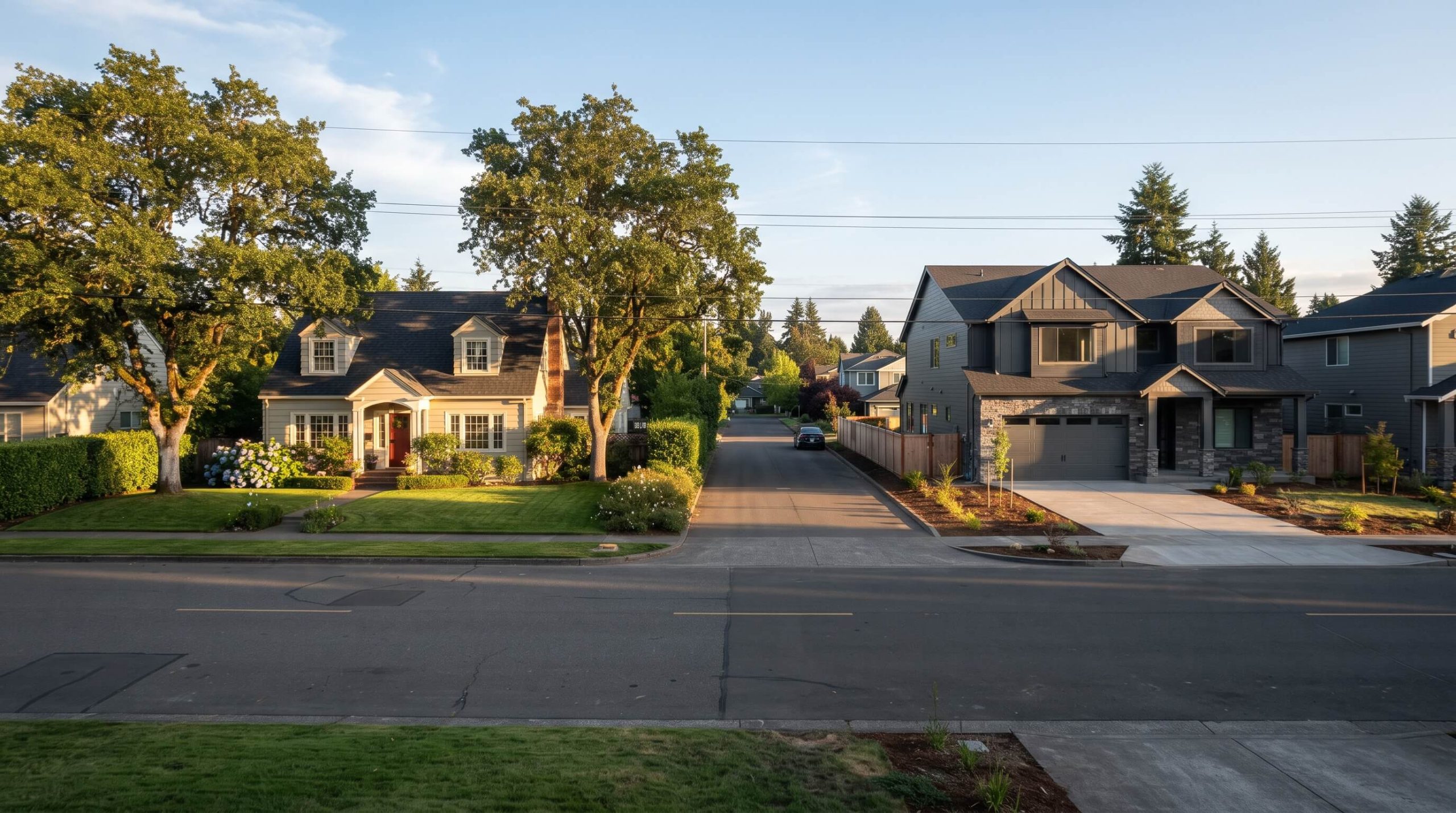
American homeowners are sitting on an extraordinary amount of housing wealth.
According to NAHB’s analysis of Federal Reserve data, owner-occupied real estate reached $49.8 trillion in the second quarter of 2026. After subtracting $14 trillion in mortgages and other housing debt, homeowners retained $35.8 trillion in equity—71.9% of the total value of their homes.
That wealth helps explain one of today’s housing-market contradictions. Home sales remain subdued. Affordability is strained. Mortgage rates have climbed back toward 7%. Yet millions of households are in remarkably strong financial positions.
The housing market is not uniformly weak. It is divided.
Two Buyers, Two Very Different Markets
Consider two households with similar incomes.
One purchased a home 15 years ago, watched it appreciate and gradually paid down the mortgage. That household may have several hundred thousand dollars in equity available for its next purchase.
The other is trying to buy its first home. It faces today’s prices, today’s mortgage rates, and the challenge of assembling a down payment without an existing property to sell.
Their incomes may be comparable, but their purchasing power is not.
For the existing homeowner, a large down payment can reduce the amount they must finance. Some owners can purchase with little debt or entirely in cash. Others can sell a home in a high-cost market and carry their equity into a less expensive one.
First-time buyers must generate that purchasing power from income and savings alone.
Affordability therefore depends on more than what a household earns. It also depends on whether that household—or perhaps its parents—already owns a home.
Wealthy on Paper, Reluctant to Move
Enormous homeowner equity does not automatically translate into housing activity.
Much of that wealth is trapped inside homes carrying mortgage rates well below current levels. Selling may let an owner access that equity, but it also means surrendering an unusually inexpensive loan.
That creates a peculiar form of gridlock. Homeowners may be wealthier than ever while feeling less able to move.
This is one reason the resale market remains constrained. The obstacle is not always a lack of financial capacity. The next home may not be compelling enough to justify trading a 3% mortgage for one near 7%.
For builders, that distinction matters.
An equity-rich homeowner is not necessarily priced out of the market. That buyer may simply require a stronger reason to enter it.
Where Equity Could Create Demand
Builders should not interpret low transaction volume as proof that purchasing power has disappeared. It has become more concentrated and more selective.
Equity may support demand from:
- Older homeowners seeking to downsize or simplify.
- Households relocating from expensive markets to less costly ones.
- Buyers who can make substantial down payments.
- Parents helping adult children purchase their first homes.
- Multigenerational households combining income and accumulated wealth.
- Owners willing to leave a low mortgage rate for a home that better fits their next stage of life.
These customers may not be searching for the least expensive home available. They may be looking for lower maintenance, single-level living, proximity to family, better amenities or a location that offers more value for their accumulated equity.
The builder’s opportunity is not simply to produce another house. It is to offer something worth moving for.
The Other Side of the Equity Divide
The market cannot rely exclusively on homeowners carrying wealth from one property to another.
First-time buyers are necessary to keep the housing ladder moving. They buy the homes that allow existing owners to sell, release their equity, and move into newly built homes. When entry-level buyers cannot enter the market, the effects eventually travel upward.
This is why record housing wealth and poor housing affordability can exist simultaneously.
The equity accumulated by current owners supports certain segments of demand. But rising prices have also widened the distance between those already inside the housing market and those trying to enter it.
Parental assistance may help some buyers cross that divide. It also makes family housing wealth an increasingly important determinant of who can become a homeowner, reinforcing the advantage of households that already own property.
What Builders Should Watch
Builders evaluating demand should look beyond median income and prevailing mortgage rates.
They should also examine:
- The percentage of buyers who already own homes.
- Typical equity levels in feeder markets.
- Cash purchases and average down payments.
- Migration from higher-cost markets.
- The age and life stage of likely buyers.
- How many purchases depend on selling another home.
- Whether the product provides enough value to overcome mortgage-rate lock-in.
These factors can reveal purchasing power that conventional affordability measures overlook.
The next housing cycle may not begin with a broad return of the average buyer. It may emerge unevenly, led by households with substantial equity, family assistance, or the ability to relocate their wealth from one market to another.
For builders, the question is no longer simply whether buyers can afford a home.
It is where their purchasing power comes from—and whether the home being offered gives them a compelling reason to use it.