



Cash flow decides whether a job runs smoothly or stalls out, and financing is where that gets won or lost.
Most builders stick with what worked last time—that holds up until projects get bigger or more complex.
From draw schedules to lender requirements and approval timelines, understanding how construction loans work helps you avoid mid-build surprises.
Let’s break down the most common types of construction loans so your financing fits the job, not the other way around.
What is a Construction Loan?
A construction loan is short-term financing used to fund a build from the ground up. Funds are released in stages tied to verified milestones such as site work, framing, mechanicals, finishes, and final inspection. If a phase isn’t completed or fails inspection, funds aren’t released.
Because the property doesn’t exist yet, lenders take on significant risk—they’re basically betting on your ability to execute and want to see a proven track record, approved permits, and a detailed project timeline before moving forward.
There are two main types of loans for ground-up construction: stand-alone construction loans and construction-to-permanent loans. For existing properties, fix-and-flip financing may also be an option.
Understanding how each works makes it easier to choose the right fit for your next project.
Stand-Alone Construction Loans
Stand-alone construction loans cover only the build. When the project is finished, the balance comes due—you either sell or refinance.
That works well for quick sales, but for long-term holds it means a second closing, added fees, and exposure to market rates at completion.
Funds are released in draws after inspections, so your schedule is critical. One failed inspection doesn’t just delay payment—it can stall the entire job.
You only pay interest on what you’ve drawn, but costs rise as the build progresses. If you don’t model expenses phase by phase, margins can disappear in the back half of the project.
Construction-to-Permanent Loans
Construction-to-permanent loans offer a “one-and-done” solution, covering the build before automatically converting into a long-term mortgage.
This single-close structure means one application and one set of closing costs, eliminating the need to re-qualify in a different market once the dust settles.
During the build, it functions like a standard construction loan: funds are released in stages, and you only pay interest on what you’ve drawn.
Once the project is complete, the loan flips to a permanent mortgage with a rate typically locked at the very beginning. For long-term holds, this removes the risk of rising interest rates or shifting lending standards mid-build.
The tradeoff is total commitment. You are locked into a lender and a rate structure before the first shovel hits the dirt.
Because there is no room to renegotiate the permanent terms later, many lenders demand perfection upfront: detailed budgets, licensed contractors, and rigorous contingency allowances must all be approved before you break ground.
Fix-and-Flip Financing
Fix-and-flip loans are built for speed—buying distressed properties, renovating them, and selling quickly.
They’re short-term, interest-only loans that end with a balloon payment at sale. Approval is driven mainly by your experience and the property’s after-repair value (ARV).
For builders juggling rehabs and new construction, everything runs on a compressed timeline. Even with draws, lenders focus heavily on your exit plan—sale price, timeline, and whether the margins hold up if the market shifts.
Rates are higher than traditional construction loans, but the speed often makes up for it. On the right deal with a clear exit, the numbers still work.
A Builder’s Cheat Sheet: Which Loan Fits Your Blueprint?
To help you map out your next move, here is a quick-reference breakdown of how these three financing structures stack up.
| Loan Type | Best For | Exit Strategy | Key Advantage | Biggest Risk |
|---|---|---|---|---|
| Stand-Alone | Spec Builds | Sale/Refinance | Flexibility | Refinance Exposure |
| Construction-to-Perm | Long Holds | Permanent Financing | Rate Certainty | Less Flexibility |
| Fix-and-Flip | Rehabs | Fast Resale | Speed | Higher Carrying Cost |
Draw Schedules, Interest Structures, and Lender Expectations
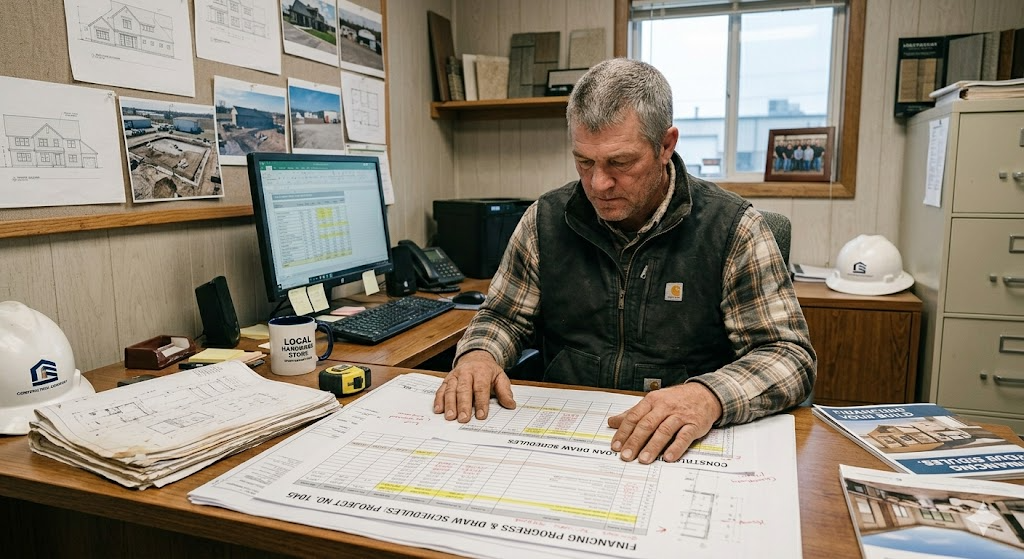
Regardless of loan type, three things determine how a construction loan performs once the job is running.
Draw Schedules
Once construction starts, funding depends on the draw schedule. Lenders release funds in stages after inspections confirm each phase is complete.
When the schedule is tight and inspections go smoothly, cash keeps flowing. If timing slips or an inspection fails, you may have to cover labor and materials out of pocket until the next draw is approved.
Interest Structures
Most construction loans charge interest only on the funds you’ve drawn, not the full loan amount. That keeps costs low early on, but interest increases as more draws are taken.
Run the numbers by phase before closing so you understand how carrying costs grow as the project reaches full draw.
Lender Expectations
Construction-to-permanent lenders typically require full documentation upfront and move on a slower, more structured timeline. Fix-and-flip lenders move faster and price that risk into the rate.
Don’t treat them the same. Match your lender to your project before you’re mid-build with someone unfamiliar with your type of deal.
Choosing Between Types of Construction Loans

Start with two questions: where is the project right now, and what does the exit look like?
- Ground-up build with a long hold or owner-occupant at the end: Construction-to-permanent is the cleaner structure.
- Ground-up build where you’re selling on completion: Stand-alone gives you more flexibility without locking into permanent terms early.
- Existing property that needs significant rehab with a fast resale: Fix-and-flip financing fits the timeline and exit.
Beyond loan type, look hard at draw schedule flexibility. A lender that’s slow to release funds or requires multiple reinspections creates cash flow problems on an otherwise solid job.
Ask specifically how draws are handled, what triggers a release and what the average turnaround is.
You should also factor in what you bring to the table. Experience level, credit profile and project documentation all affect terms.
Finally, a lender that works regularly with builders on your project type will move faster and structure deals that fit how you actually operate.
Match the Financing to the Work
Financing isn’t a “set it and forget it” paperwork drill—it is the pulse of your project.
From the first shovel in the ground to the final walkthrough, every draw request and vendor payment ties back to the foundation you laid at the closing table.
At Sound Capital, we don’t just move money. We provide construction financing engineered for the reality of the job site. We build our loans around how you actually work—so you can spend less time balancing books and more time breaking ground.
Grab a no-hassle term sheet and get your next spec build off the ground today.