

Construction has always demanded toughness.
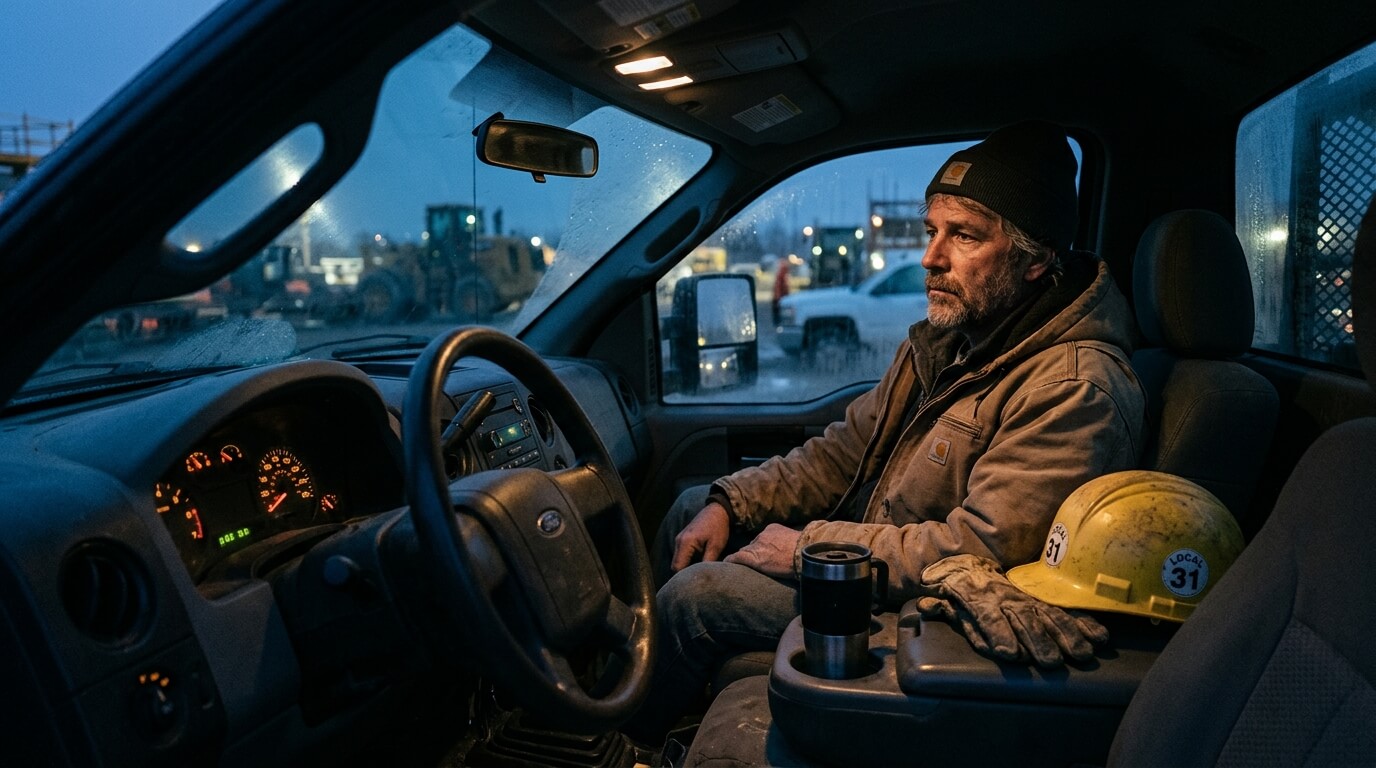
Early mornings. Long hours. Delays. Budget pressure. Physical exhaustion. The expectation that no matter what happens — weather, inspections, labor shortages, financing issues, material delays — the work keeps moving.
And for a long time, the industry has worn that toughness almost like a badge of honor.
But there is another side to that culture that builders are starting to talk about more openly: the invisible weight people carry as they try to hold projects, companies, crews, and families together all at once.
A recent BUILDER article highlighted the growing momentum behind Hard Hat Courage, a construction-focused mental health initiative developed by the American Foundation for Suicide Prevention after research showed construction has one of the highest suicide rates of any industry in the United States.
That statistic is sobering on its own. But the deeper issue may be what it reveals about the nature of the work itself.
Construction demands that people absorb enormous pressure while continuing to perform at a high level every day.
Builders and company owners carry financial exposure that most people never see. One delay can ripple through an entire schedule. One bad project can affect payroll, vendor relationships, and future opportunities. Many operators live in a constant state of problem-solving, often without ever fully shutting off mentally.
But the pressure does not stop at ownership.
Tradespeople carry a different kind of weight.
Physical exhaustion.
Chronic pain.
Long commutes.
Time away from family.
Unpredictable schedules.
Working through heat, cold, injuries, and fatigue because the job still has to get done.
Many workers learn early that pushing through discomfort is simply part of the culture.
Add labor shortages, rising expectations, and the uncertainty that comes with construction work itself, and the cumulative load becomes significant across every level of the industry.
The industry depends on people who know how to keep showing up under pressure. The problem is that the ability to keep going can also hide when someone is reaching a breaking point.
That is why this conversation matters.
What makes initiatives like Hard Hat Courage interesting is that they do not treat mental health as separate from job-site performance or safety. They are treating it as connected to everything else.
Fatigue affects judgment.
Chronic stress affects awareness.
Burnout affects decision-making.
Isolation affects morale.
These are not abstract personal issues disconnected from the work. They influence how safely and sustainably people operate in high-pressure environments.
And importantly, the industry itself appears to be leading the shift.
This does not feel like outside organizations lecturing construction companies about culture. It feels more like builders recognizing that toughness and sustainability are not the same thing. You can push through pressure for a long time. That does not mean there is no cost.
Housing shortages, affordability problems, and supply constraints dominate the national conversation right now. But beneath it all is a reality that often gets overlooked: the entire housing market ultimately depends on human beings who carry extraordinary responsibility every day.
Homes do not appear because demand exists. They are built by people managing risk, pressure, uncertainty, coordination, and physical labor simultaneously.
That human side of the industry rarely gets discussed.
Maybe it should.
Because the strongest construction companies of the next decade may not just be the ones that build the fastest or scale the biggest. They may also be the ones that understand how to keep their people healthy enough—physically, mentally, and emotionally—to keep building for the long haul.
Find additional resources from Hard Hat Courage, including 988 You Are Not Alone stickers at hardhatcourage.com.